7 Signs Your Commercial Kitchen Exhaust Needs Cleaning
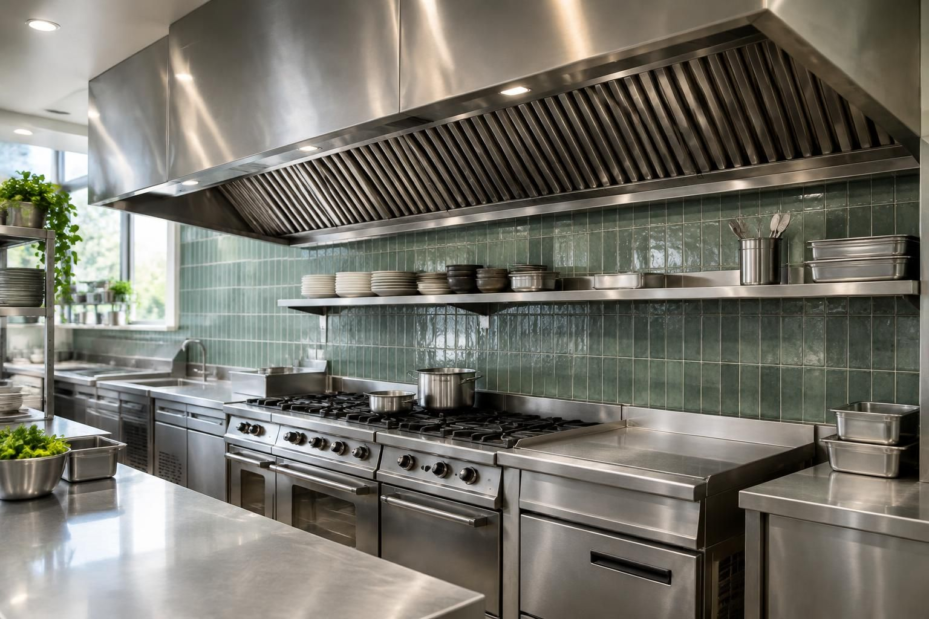
A polished dining room can hide a maintenance problem above the cooking line. For Melbourne restaurants, hotels, pubs and clubs, a clean-looking canopy does not necessarily mean the entire kitchen exhaust system is clean.
Grease dripping from the hood, smoke escaping capture, damaged filters and an unclear maintenance history all warrant attention. Some symptoms point to cleaning; others can indicate a fan, airflow or installation problem. The right response is to establish the cause—not simply wipe the visible stainless steel and assume the issue is solved.
This guide helps venue managers recognise seven warning signs and prepare for a professional inspection. It is not a substitute for an assessment of your particular system.
Why look beyond the canopy?
Your kitchen exhaust is a connected system: the canopy or hood, grease filters, ductwork and exhaust fan all play a role. Filters reduce the grease entering the system, but deposits can still accumulate downstream.
The Australian Institute of Refrigeration, Air Conditioning and Heating (AIRAH) explains that accumulated grease and other combustible material can allow a kitchen fire to spread through an exhaust system. Its Commercial Kitchen Exhaust Management Best Practice Guide recommends periodic inspection and cleaning where deposits require it. A shiny exterior alone is not evidence that hidden surfaces have been inspected.
1. Grease is dripping or pooling around the hood
Fresh drips, sticky edges or grease collecting where it should not are a reason to investigate. Record where the deposit appears and whether it returns soon after routine cleaning. A professional can assess whether the source is a loaded filter, a collection component or contamination further inside the system.
Next step: report the location to your maintenance contact and arrange an assessment. Do not let grease drip onto food or cooking equipment; follow your venue’s safety procedures if the cooking line cannot be operated safely.
2. Smoke escapes the canopy during normal service
If smoke or cooking vapour starts spilling into the kitchen rather than being captured, treat it as a ventilation issue. Dirty filters or deposits may contribute, but fan faults, inadequate replacement air or a changed cooking layout can also be involved.
Next step: note when it happens, which appliances are running and whether the problem began after equipment or ventilation changes. Request an inspection rather than assuming cleaning alone will restore performance.
3. Grease filters are heavily loaded, damaged or do not fit
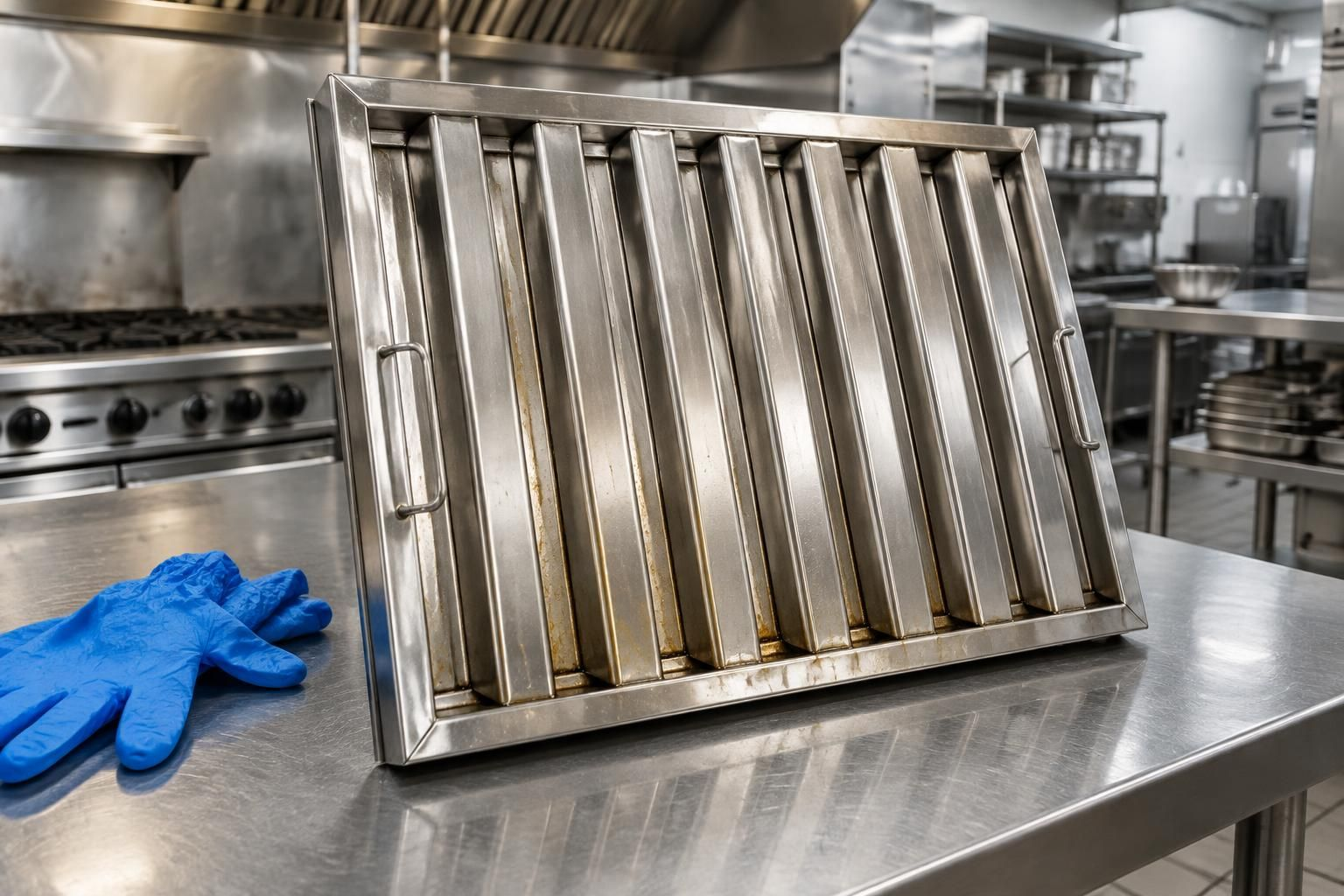
Look for visible residue, distorted frames, missing filters and gaps around installed filters. The correct fit matters: filters are part of the exhaust system, not simply removable splash screens. Follow the equipment manufacturer’s instructions for handling and cleaning them.
Next step: ask your provider to assess filter condition, fit and maintenance frequency. A scheduled grease filter exchange and cleaning service may suit venues where consistent in-house cleaning is difficult to maintain. Do not operate the system with filters missing or substitute an unsuitable filter.
4. Persistent odours or unusual heat are affecting the kitchen
A new lingering cooking odour or noticeably hotter kitchen deserves investigation, especially if it coincides with poor smoke capture. These symptoms do not prove the duct is dirty: appliance use, replacement air and mechanical faults can also affect conditions.
Next step: record the change and ask for the exhaust and ventilation performance to be checked. A cleaning contractor and a qualified mechanical specialist may need to address different parts of the problem.
5. The accessible canopy surfaces look clean, but the duct condition is unknown
Routine wiping and filter cleaning do not show what is happening beyond the hood. AIRAH highlights that access is essential for meaningful inspection and maintenance. If nobody can explain which sections were inspected, or an access problem remains unresolved, you have a gap in your maintenance information.
Next step: ask what was inspected, what was cleaned and which sections could not be accessed. Request a plan for addressing inaccessible areas. Staff should not climb onto roofs, enter ducts or remove electrical equipment to investigate.
6. Your kitchen’s cooking load has changed
A new chargrill, a busier service, longer opening hours or a menu with more frying can change the maintenance demands on the system. An old schedule may no longer reflect how the venue operates.
Next step: tell your provider about equipment, menu and operating-hour changes. Review the inspection and cleaning program using observed conditions, manufacturer guidance and any applicable requirements—not an arbitrary interval copied from another restaurant.
7. You cannot find a clear inspection or cleaning record
If the last service date is uncertain, the invoice only says “canopy clean”, or there is no record of excluded areas, it is difficult to judge what remains outstanding. This does not prove contamination, but it is a good reason to establish the system’s current condition.
Next step: gather the most recent reports, invoices and access notes. Ask for a documented inspection scope and clear recommendations for follow-up work. Check any specific maintenance conditions with your insurer or responsible adviser.
A practical pre-service checklist for venue managers
- Record the symptoms: where grease appears, when smoke escapes and what has changed.
- Describe the cooking load: appliances, main cooking methods and typical service hours.
- Gather the history: previous inspection and cleaning reports, filter schedules and unresolved access issues.
- Confirm access: identify who can authorise work, roof access and any landlord or building-management arrangements.
- Agree on the scope: establish which hood, filter, duct and fan components will be inspected or cleaned, and which require separate specialists.
- Keep the outcome: retain the report, exclusions and recommended next inspection date with your venue’s maintenance records.
Only make observations from safe, normally accessible positions. Do not reach into a running system or dismantle equipment. If there is a fire, immediate danger or the system is unsafe to operate, follow your emergency procedures and call 000 when appropriate.
Can filter cleaning replace a full exhaust clean?
No. Filter maintenance and exhaust cleaning address different parts of the system. Maintaining filters helps reduce grease entering the duct, but does not remove deposits already inside it. Read our guide to canopy cleaning versus filter exchange for the distinction.
How often should the system be cleaned?
There is no single interval that should be presented as suitable for every commercial kitchen. AIRAH’s guide takes an evidence-based approach using inspection findings and observed grease accumulation. Your cooking load, system design, access and applicable obligations all matter. Our commercial canopy cleaning frequency guide explains the questions to discuss with your provider.
Kitchen exhaust cleaning in Melbourne
Clean Air Filtration provides canopy, hood and kitchen exhaust cleaning in Melbourne, alongside grease filter exchange and cleaning. Our canopy and exhaust cleaning is carried out to AS 1851.
For an assessment or service enquiry, contact our team or call (03) 9303 9661. Tell us what you have noticed, how your kitchen operates and when it was last inspected so we can discuss the appropriate next step.
Source and image notes
Technical background: AIRAH, Commercial Kitchen Exhaust Management Best Practice Guide (2022), particularly its guidance on grease-related fire risk, access, inspection and evidence-based maintenance. This article offers general operational guidance, not a compliance certificate or site-specific diagnosis.
The two new kitchen and filter images are AI-generated editorial illustrations. They are not before-and-after evidence or photographs of a Clean Air Filtration client’s kitchen.